3 Kinds of Shih Tzu Allergies and the Best Ways to Treat Them
Published 9 February 2021. Updated 28 February 2026

How do you deal with Shih Tzu allergies?
Shih Tzu allergies are actually not that uncommon; approximately 20% of dogs get allergies at least one type. Signs of Shih Tzu allergies could be daunting, usually overwhelming, and could actually take quite a toll on this small dog breed.
Shih Tzu Allergies
Nobody knows if Shih Tzu allergies are inborn. Nonetheless, a lot of people believe they are triggered by the environment.
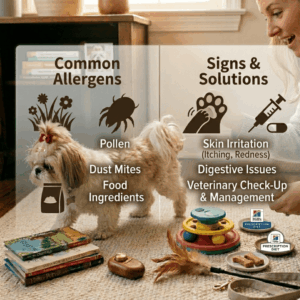
In many instances, if you start to notice that your Shih Tzu has been developing skin issues that involve rash, hives, or even weepy itchy sores, your pup’s allergies might be triggered by the food you are giving him, flea and tick bites, or even airborne allergens.
Poor grooming could likewise be the cause. Moreover, there are some Shih Tzu allergies that are triggered by certain household deodorizers or cleaners.
Providing your Shih Tzu with regular grooming and a balanced and healthy diet could be all that you need to keep your pup’s coat and skin shiny and healthy. Dogs in their best shape have strong immune systems, keeping allergies as well as other health issues at bay.
Please remember that poor grooming could likewise cause health conditions with your Shih’s skin and coat. Matted fur could trap moisture, and that means ideal living conditions for infection and hot spots, which is an awfully painful sore that builds up on your Shih Tzu’s skin.
Kinds of Shih Tzu Allergies
Shih Tzu allergies could be triggered by a broad range of allergens. Nonetheless, these could be classified into 3 key categories:
1. Environmental Allergies
This kind of allergy is commonly triggered by weeds, grasses, and seasonal pollen. This isn’t only a summertime problem; seasonal Shih Tzu allergies could likewise start in spring, and ragweed is a primary trigger in autumn.
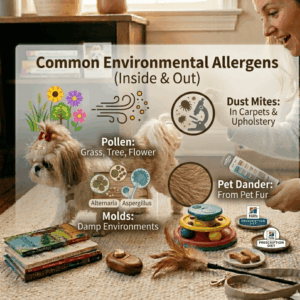
Moreover, cleaners or air deodorizer sprays that are a common household material can likewise contribute to Shih Tzu allergies.
2. Food Allergies
Oftentimes, the food additives in pet food trigger Shih Tzu allergies. Unfortunately, a lot of brands are guilty of putting these into their products. This includes artificial colors or flavoring and chemical preservatives. Other allergy triggers include ingredients with gluten, like wheat and its by-products.
Although it is rare, Shih Tzus could also be allergic to eggs or even to chicken, which is usually well tolerated.
3. Contact Allergies
This is the most unusual kind of dog allergy, but it shouldn’t be ruled out nevertheless. Contact allergies refer to something that your Shih Tzu is comes in physical contact with.
This could also include certain fabrics, carpeting, and/ or the detergents and cleaners that are used to wash them. In some instances, even plastic bowls and rubber toys could trigger Shih Tzu allergies.
In many cases, you would notice a localized skin reaction on the body part that comes into contact with the allergen. For instance, you would notice skin inflammation around the nose and mouth if your Shih Tzu was allergic to his or her plastic food bowl.
If the dog, however, is allergic to the carpet or even the laundry detergent that was used to wash the rugs, there could be a full body rash.
Diagnosing Shih Tzu Allergies
All pups scratch a bit here and there. Shih Tzus might scratch if they are annoyed with a hair mat or a piece of twig that has was tangled in their long coat.
These kinds of scratching call for a grooming session and mustn’t be confused with the serious Shih Tzu allergies that were mentioned above.
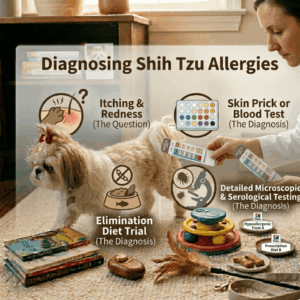
If your Shih Tzu is exhibiting any of these symptoms of Shih Tzu allergies, it would be best to go for a visit to the vet. They can give a thorough examination to your Tzu, ask you a few questions, diagnose the cause of the symptoms, and plan a course of action.
- Does your Shih Tzu have fleas?
- Is scratching most intense in particular seasons of the year?
- Have you used new solutions and chemicals in spots frequented by your dog?
- Have you given your Shih Tzu a different type of medication, treat, or food?
- Did you change dog foods recently?
- Have you used a new shampoo on your dog?
Allergy Testing
Allergy testing could be done by extracting a blood sample or performing a skin test. Skin testing is done by shaving a little patch of hair on your dog’s side. Trace amounts of various allergens are then injected under your Shih Tzu’s skin. If his skin reddens, swells, or bumps form after the allergen injections, the dog is allergic to that allergen.
Shih Tzu Allergies: Treatment
There is a wide variety of treatment possibilities for Shih Tzu allergies, and it depends upon the allergen involved.
Food Allergies:
As mentioned before, the only way to remedy a Shih Tzu food allergy is to ensure that your dog doesn’t ingest the ingredients known to trigger his allergies.
Flea Allergies:
Prevention is definitely a much easier route than treatment. An effective flea control program must begin before the flea season starts in your area. Your vet is a great source for flea medications.
Medications Usually Prescribed
- Allergy shots for Shih Tzus help those who have airborne Shih Tzu allergies.
- Antibiotics are usually given to treat secondary infections.
- Antihistamines might help alleviate some Shih Tzu allergies.
- Serious Shih Tzu allergies might need steroids. These, however, must be used with great caution, and with your veterinarian’s guidance.
Other Shih Tzu Allergies Options
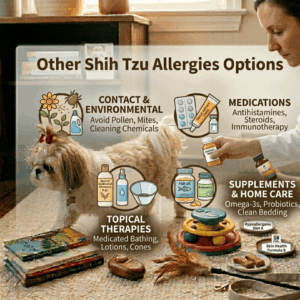
- Shih Tzu allergies can be treated by bathing the dog at least once a week using mild shampoo to get rid of molds, pollens, dust, and other debris. Your vet might also recommend a medicated shampoo that has an anti-inflammatory agent.
- Wash your dog’s bedding a few times a week using a hypoallergenic detergent.
- Use only non-toxic cleaning solutions
- Invest in a high-quality air purifier to prevent and control dust mites.
- Only use bottled of filtered water.
- Be cautious of vets who want to over vaccinate your pup. Excessive vaccinations could trigger your dog’s over-reactive immune system, and it could lead to allergic conditions.
Bottomline
The symptoms and treatments for Shih Tzu allergies depend on the kind of allergies your dog is experiencing. When your vet has determined what is triggering the allergies, proper steps could be taken to help your Shih Tzu feel normal again.